
The Future Homes Challenge
How do we construct and future proof millions of homes and bridge the skills and innovation gap?
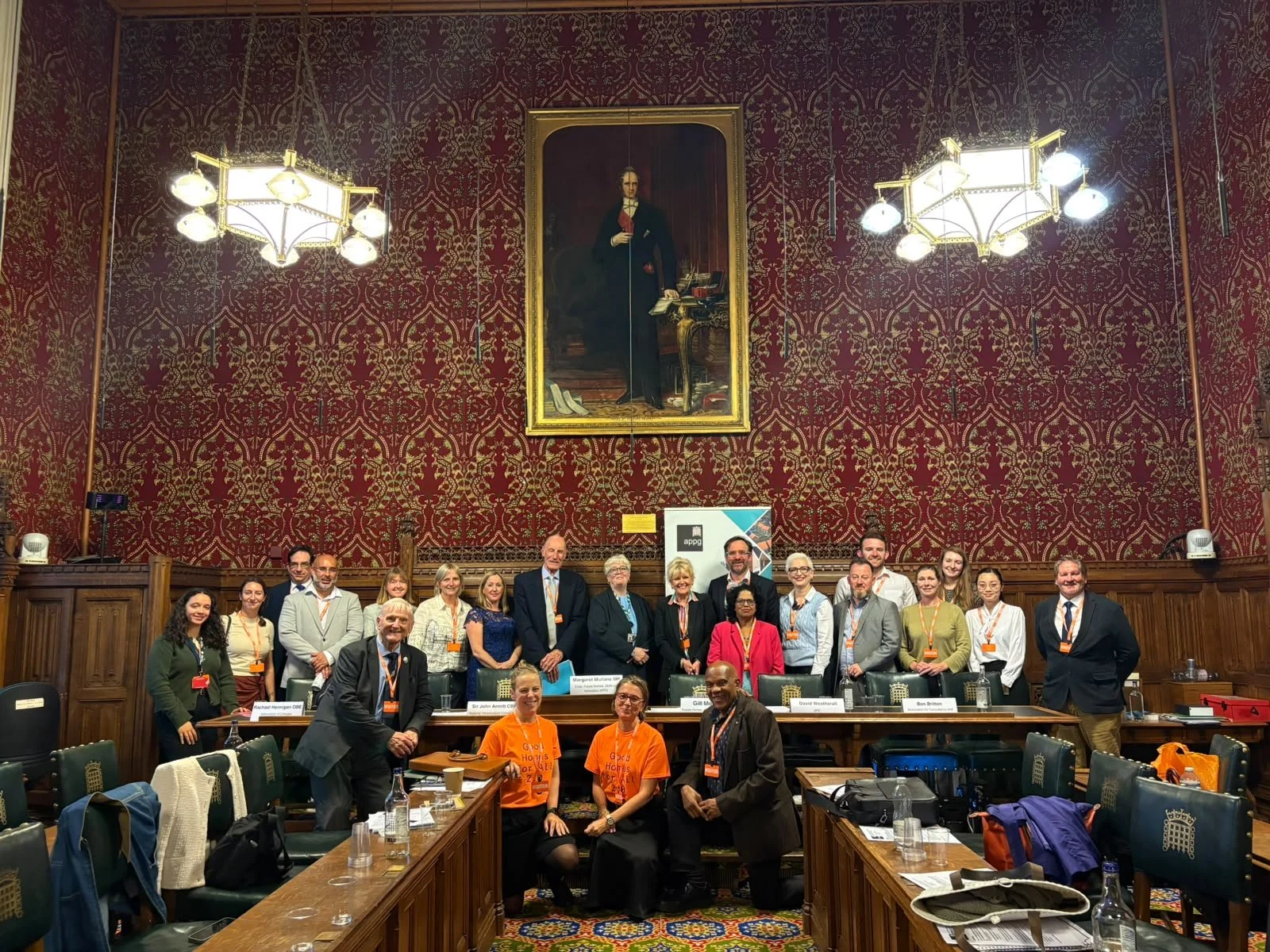
On Wednesday 9th September, the Future Homes, Skills and Innovation APPG held a vital session in Westminster, focusing on how we can construct and future-proof millions of homes while bridging the critical skills, infrastructure, and innovation gaps across the region and nation.
Chaired by Margaret Mullane MP, the session opened with a keynote address from Sir John Armitt CBE, Chair of the National Infrastructure Commission, followed by a panel of industry, research, and education leaders.
The session tackled the systemic challenges facing the UK construction and housing sectors—from an aging workforce and deep-seated industry fragmentation to supply chain instability and regulatory bureaucracy. Attendees examined how consistent policy leadership, strategic local devolution, and modern workforce training are essential to delivering warm, sustainable homes and accelerating regional growth.
We were joined by a fantastic panel of expert contributors including:
Melissa Zanocco OBE, Challenge Director: Growth Mission, UK Research and Innovation (UKRI)
Rachael Hennigan OBE, CEO and Principal, Association of Colleges / Hugh Baird College
David Weatherall, Head of Policy, Building Research Establishment (BRE)
Ben Brittain, Director of Public Affairs, Association for Consultancy and Engineering (ACE)
The discussion spanned a wide range of critical topics, including the need for long-term pipeline certainty to give employers the confidence to invest in talent, and the role of Mayoral Strategic Authorities in expediting local projects.
Panelists and audience members explored the potential of modern methods of construction (MMC), the need for specialised retrofit training to upgrade cold homes, and the urgency of addressing an impending talent drain as one-quarter of engineering professionals near retirement.
The session concluded with an audience Q&A on navigating complex accreditation systems for climate technologies, lowering procurement barriers for SMEs, and making construction careers more inclusive and attractive to young people.
Key Messages
Policy leadership and pipeline certainty: The construction sector suffers from fragmented policies and frequent political turnover. For businesses to invest in long-term apprenticeships, modern technology, and local supply chains, central and regional government must provide a stable, multi-year pipeline of work.
A systemic approach to skills and physical capacity: Closing the skills gap requires more than just funding bootcamps or youth schemes; it demands direct employer investment, expanded physical capacity within colleges, and strategic alignment between local authorities and education providers to meet real labor market demands.
Designing out future retrofit crises: Retrofitting needs to be planned early at the design and engineering stage. Upfront investment in quality engineering, design standards, and smart systems prevents newly built properties from becoming tomorrow’s expensive retrofit projects.
Breaking down barriers to innovation: Emerging climate technologies and modular housing models face significant bureaucratic hurdles, rigid procurement frameworks, and traditional industry resistance. Streamlining standards and building independent validation processes are key to scaling up warmer, energy-efficient homes.
Place-based collaboration and devolution: Devolved strategic authorities are uniquely positioned to act as conveners, joining up housing, skills, and industrial strategy across the Liverpool City Region to ensure local communities benefit directly from major construction and regeneration projects.
