
How Do We Build Quality, Standards And Resilience Into 1.5 Million New Homes And Retrofit For The Future?
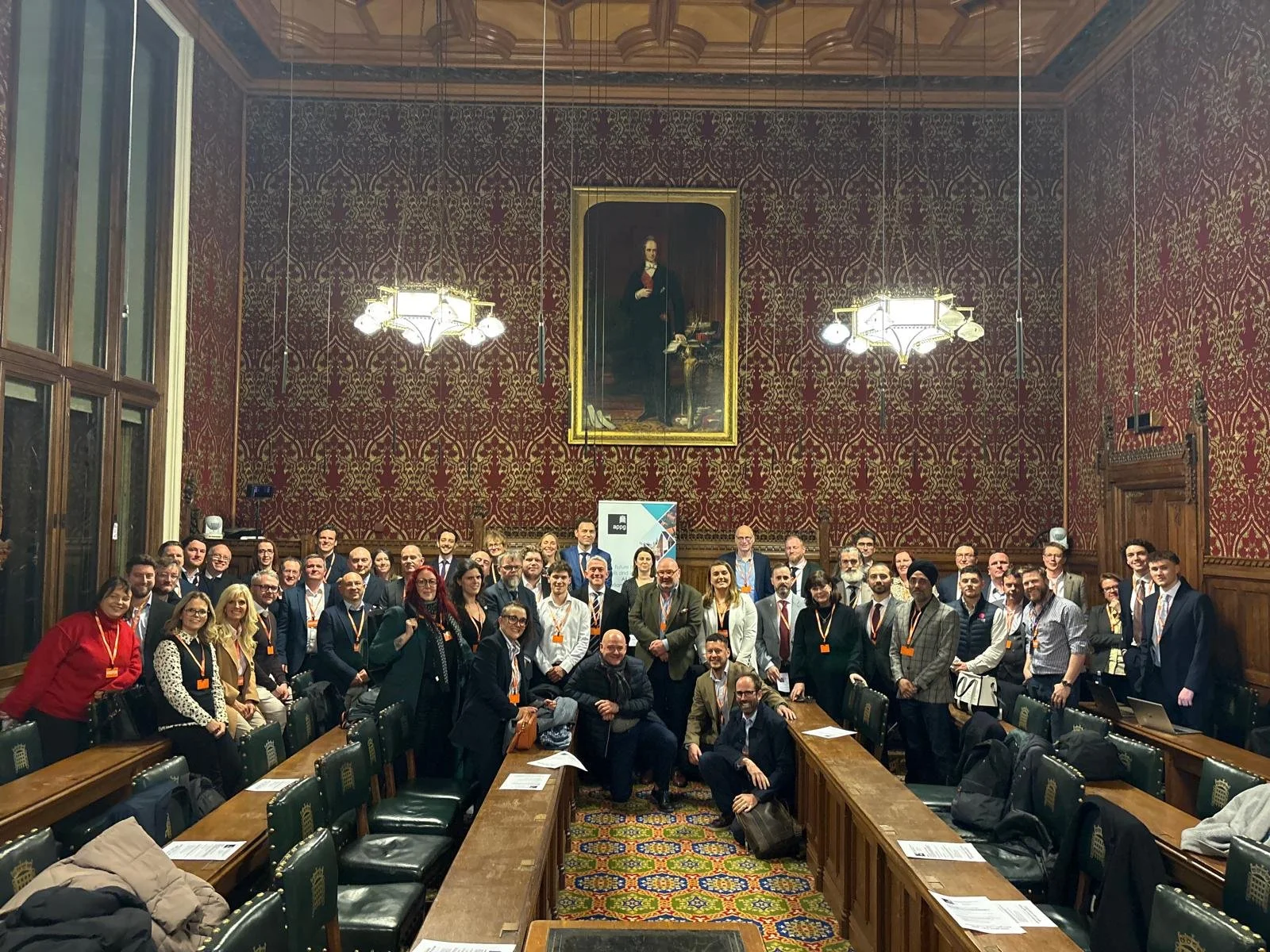
On Monday 23rd February 2026 , the Future Homes, Skills and Innovation APPG held its second session, focusing on ensuring quality in delivery against the backdrop of the governments ambition for 1.5 million homes.
Chaired by Amanda Hack MP, and joined by over 100 attendees and a panel of industry experts, the Future Homes, Skills and Innovation APPG held its second session in Parliament with a laser focus on housing quality in new builds and retrofit. Our expert industry panel comprised a wide variety of leaders, including;
Nick Miles, EWI PRO
Kirsty Girvan, UK Green Building Council
Alex Baines, Retrofit Standards Taskforce
David Adams, Future Homes Hub
Daniel Hicks, National House Building Council
Becci Taylor, Design Council
Edward Jezeph, Homes England
Our session got into the fine detail of where government and industry can go further to promote quality in our homes for the future - without creating a retrofit challenge for the decades ahead. The guiding principle of the session was clear:
“Quality First. Confidence Restored. Homes Built to Last”
Our panel discussed whole sector challenges, such as the need for long-term policy stability, to increase investor confidence and coherence. The panel also supported other key foundations for ensuring quality, such as coherent and simplified standards, whole-home performance led delivery and the need to view skills as the critical infrastructure necessary to upscaling our current housing delivery.
The session also heard the need for policy to accurately reflect the structure of the sector itself: 44% of current UK construction output comes from the repair, maintenance and improvement (RMI) sector - but 30% of this sector is self-employed and 86% of RMI businesses are defined as ‘micro-businesses’.
The need for climate resilience was also a key topic of discussion. With 1/4 homes currently at risk of flooding, and the UK construction sector accounting for approximately 20% of embodied carbon output, critical points were raised in the session on how the sector can go further to increase adaptation while reducing carbon emissions.
Key Messages
New build and retrofit are not separate debates. If the Future Homes Standard is implemented well, new homes should not require major upgrades within a decade. If the Warm Homes Plan succeeds, our worst-performing homes should no longer trap families in fuel poverty
We need retrofit to focus on resilience. It is essential that homes are warm in winter and cool in summer, these design features should be embedded in all future homes.
We need regulations that can establish a dialogue with each other. A whole life, whole system approach across the guidance, field of construction, operations and the middle.
Stop start doesn't work in new builds and doesn't work in retrofit. We need the confidence of industry to be able to invest. Regulation is actually great to invest against - it's pretty solid if designed really well.
We also could use a more transparent timeline of building solutions, coupled with other aspects such as quality assurance.
This isn't a discussion about tech, it's about communications; we need to get the everyday health message across. When you talk about unlocking innovation, when we start talking about a holistic approach, innovation will come.
Let's stop doing piecemeal policy. Let's have a set of policies that will transcend party politics.
We need to address new build. We are building homes that aren't deemed as suitable for the social housing sector so are being retrofitted using government funding. The worst performing homes that cannot be retrofitted due to cost caps are then being sold onto the Private Rented Sector.
Key Outputs
Letter sent to Minister for Energy Consumers, Martin McCluskey MP, highlighting the key topics of the session as well as the willingness of the APPG to provide a constructive, delivery-focused dialogue.
Written parliamentary questions tabled based on session discussion.
